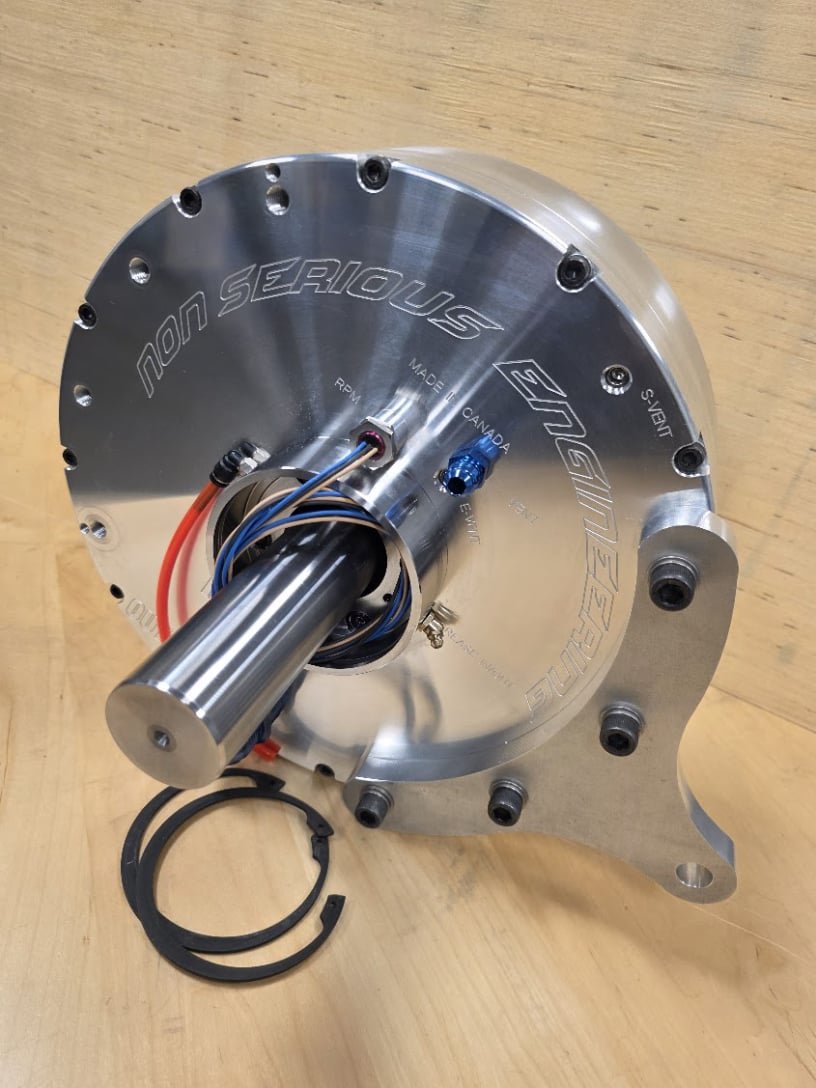
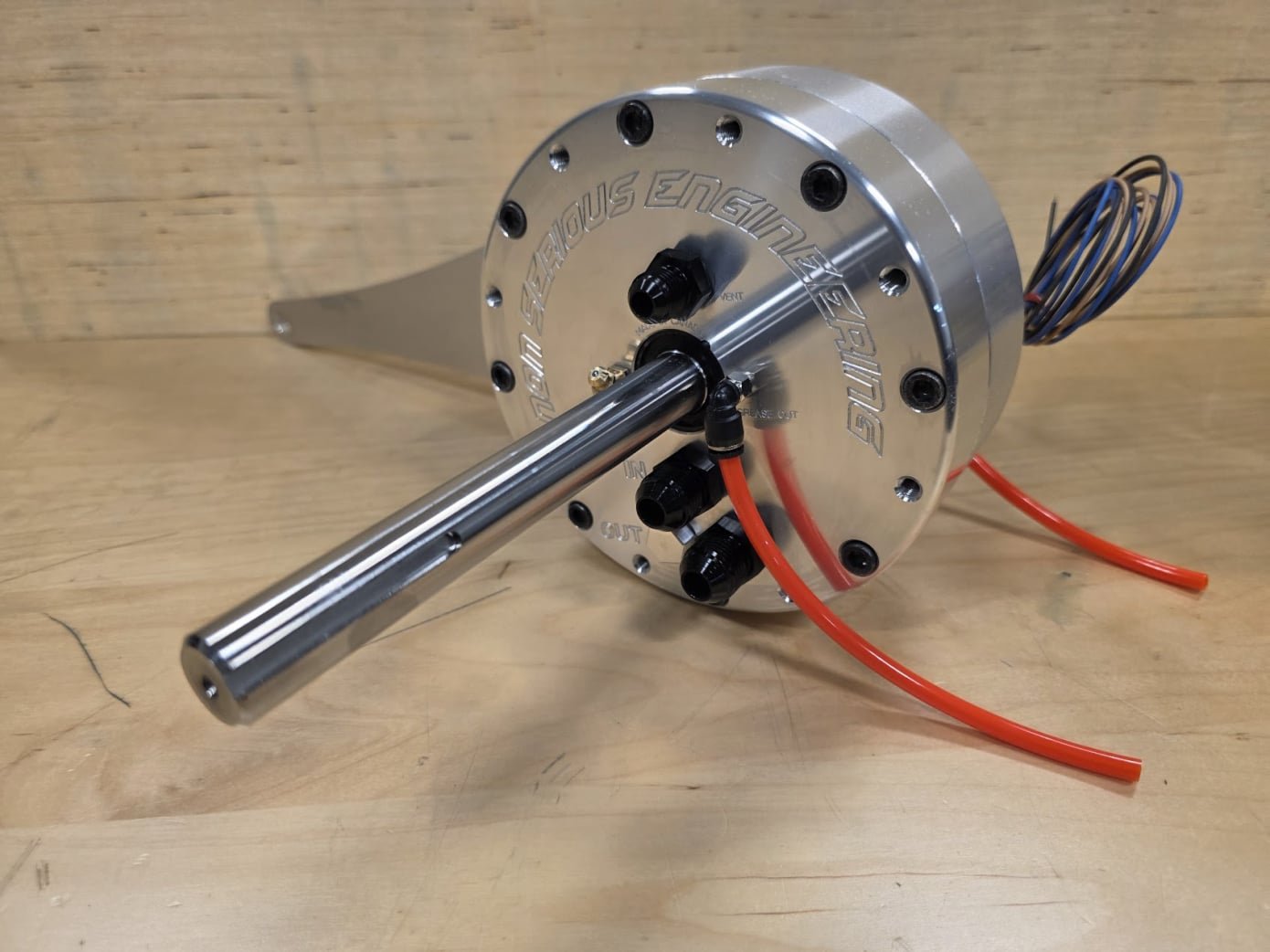
3in WaterBrake Single Rotor
Mobirise Website Builder
Water Brake Dynos

General
Model: 3-inch Single Rotor Water Brake
Application: Small engines
Rate Power
30HP standard power
Mechanical
Rotor Diameter: 3 inches
Rotor Design: Single-rotor brake (precision milled surfaces)

HousingMaterial:
CNC-machined aluminum(rigid,thermallystable)
Shaft Material: High-strength 4340HTSR steel (precision ground and balanced)
15.875 mm or 5/8 output shaft 
100mm stick out both ends
Shaft Note: Custom shaft option is available , Customer can choose.
Bearings: High-speed grease-lubricated / oil-lubricated bearings suited for 25,000 RPM operation
Seals: High-temperature dynamic seals to prevent leakage at speed
LeadTime 45 Days
Price 1995USD + 4% paypal fee
Gallery

Mobirise Website Builder

NSW 3-Inch Water-Brake Dynamometer

Compact High-RPM Absorber for Small Engines

The NSW 3-inch water brake is the smallest absorber in the NSW range and is intended for compact, high-speed engine applications where low rotating mass, small physical size and precise load control are important.

Typical applications include kart engines, small motorcycles, two-stroke development engines, chainsaws, small industrial engines and other high-RPM powerplants.

How the 3-Inch Brake Works

The engine drives the internal rotor while water is introduced into the absorber. The rotor accelerates the water and transfers it into the stationary pocket system. Repeated acceleration and redirection of the water generates a reaction torque on the absorber housing.

That reaction is measured through a torque arm and load cell.

Horsepower is then calculated from measured torque and RPM.

Water Supply

For engines around 20 HP, NSW recommends as a minimum starting point:

1 GPM at approximately 12 PSI or higher dynamic pressure.

Additional pump capacity is recommended so the pump does not operate continuously at its maximum capability.

Small water-brake systems are especially sensitive to restrictions caused by undersized hose, small fittings and restrictive valves.

Plumbing

The water system should normally follow:

Reservoir / Water Source → Pump → Pressure Regulation → Load-Control Valve → Water Brake → Discharge

Dynamic pressure should be measured while water is flowing.

Static pump pressure alone is not sufficient for determining system capability.

Load Control

The brake can be operated using either manual water control or an automatic load-control valve.

Accurate and stable water regulation allows:

RPM sweep testing
steady-state testing
engine tuning
break-in testing
torque measurement
power measurement
Best Suited For

The 3-inch NSW brake is intended for applications where high RPM and compact packaging are more important than extreme torque capacity.

No Code Website Builder